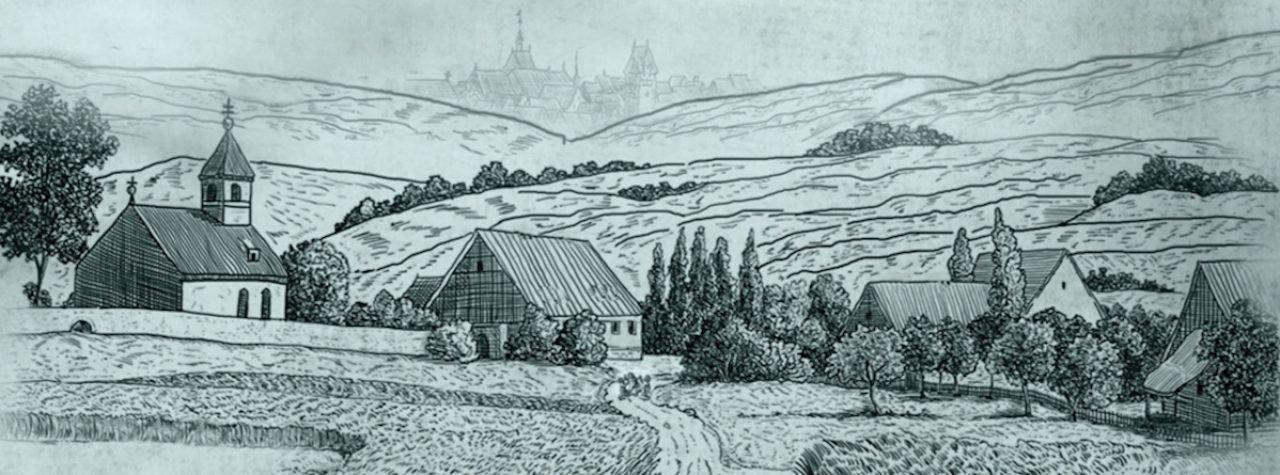
A handy reference to some of the medieval terms used in the MEONBRIDGE CHRONICLES.
Almoness – The nun responsible for distributing alms to the poor, an important function in all nunneries.
Bailey – A courtyard of a castle or fortified house, enclosed by an outer wall.
Bailiff – The lord’s chief official on the manor.
Bishop’s visitation – A regular (every few years or so) inspection of the institutions of a bishop’s diocese to ensure that the clergy, parish officers, and inmates of religious houses were following ecclesiastical law. In a nunnery, the visitation gave the nuns the opportunity to raise any concerns they had about the running of their nunnery (as in Sister Rosa’s Rebellion). The bishop himself might carry out the visitation, or arrange for trusted subordinates to do it.
Boon-work – Extra work done by tenants, typically at harvest time or hay-making, when the lord would usually provide food and drink for the workers. See also Week-work
Braies – The equivalent of men’s underpants, braies were a loose garment, usually made of linen and held up by a belt, and which might hang below the knees or be short to mid-thigh.
Brewet – Generally, a sort of meat stew, which, in wealthy households, might be rich and spicy. In peasant households, a brewet was likely no different from a vegetable pottage (that is, it would have little or no meat).
Bride ale – A wedding feast.
Barber-surgeon – A medical practitioner who, unlike many physicians of the time (who were more interested in the imbalance of humours), carried out surgical operations, often on the battlefield. Many had no formal training, and were often illiterate. Alongside surgery, the tasks they carried out included bloodletting, teeth extraction, performing enemas, treating all manner of ailments and selling medicines (as well as, presumably, cutting hair).
Canonical hours – See also Holy offices. The specified times for prayer but also used to mark the times of day:
Matins: Midnight or sometime during the night
Lauds: Dawn or 3 a.m. Prime: The first hour, about 6 a.m.
Terce: The third hour, about 9 a.m.
Sext: The sixth hour, about noon
Nones: The ninth hour, about 3 p.m.
Vespers: The “lighting of the lamps”, about 6 p.m.
Compline: The last hour, just before retiring, around 9 p.m.
Carole – A dance with any number of participants who danced in a ring or chain, following a leader and singing the accompanying music, probably a well-known ballad.
Cellaress – The nun responsible for providing the food of the nunnery sisters and the domestic servants, and usually supervised the home farm. She laid in all the stores, obtaining some from the home farm and some by purchase in the village market, or at periodical fairs. She had to order the meals, engage and dismiss servants and see to all repairs.
Chambress – The nun responsible for everything to do with the nuns’ clothes and bed linen, ensuring that they were available, clean and in good repair.
Chantress (or Precentrix) – The nun responsible for ensuring the chapel services and holy offices ran smoothly and reverentially. She also trained the novices in singing and led the sisters in their singing of the psalms and hymns.
Chapter house – The building or room in a nunnery that was set aside for meetings.
Choler – Bad temper. See Humours
Comperta – See Detecta/Comperta
Compurgator – In medieval law, a witness who swears to the innocence or good character of an accused person in a court of law, or, for example, at a bishop’s visitation (as in Sister Rosa’s Rebellion). A defendant could establish his innocence by taking an oath and then getting a number of persons, (often as many as twelve), to swear they believed his oath. The witness is not necessarily swearing that he knows the person to be innocent but that he believes he is of good character. Compurgation was also referred to as oath-helping or trial by oath.
Consistory court – An ecclesiastical court, which, in medieval times, had jurisdiction over both the clergy and ordinary people concerning matters of church discipline and morality, as well the management of church property. The judge was appointed by the bishop of the diocese.
Corrodian – A corrodian was essentially a pensioner who lived in a monastery or nunnery during the Middle Ages. They were usually elderly and well-to-do, who paid (or were sponsored) a stipend, the corrody, to provide for accommodation, food, drink, light, heat, and sometimes clothing and laundering for the rest of their lives. The corrodians might pay the stipend in cash but often they donated land or property to the nunnery.
Cotehardie – A fitted tunic worn by both men and women, the male version often quite short, the female’s trailing on the ground. It was worn over an undergarment of some sort, a shirt for a man, perhaps a chemise and a thin kirtle for a woman.
Cottar – The tenant of a cottage, usually holding little or no land, on the bottom rung of village society.
Crécy, battle of – One of the decisive battles of the Hundred Years War, fought in August 1346, the first of three notable English victories against the French.
Crespine and fillet – Elements of a headdress for a wealthier woman: a net, possibly made of wire, and a band of some sort to hold it in place.
Croft – The garden plot of a village house.
Demesne – The part of the lord’s manorial lands reserved for his own use and not allocated to his cottars or freeholders.
Detecta/Comperta – Detecta were the matters revealed to the bishop or his commissioners through the interviews with the nuns during the bishop’s visitation, which were recorded and used to assess what was working well or otherwise in the nunnery, what had to be changed, and what injunctions they’d impose to ensure the changes were carried out. The comperta were what the commissioners learned, those matters that demanded further enquiry, perhaps requiring recalcitrant sisters to be summoned once again to be asked to admit to or refute accusations.
Dorter – Another name for the dormitory, where all sisters in a nunnery were expected to sleep.
Dwale – An anaesthetic made from Atropa belladonna, or deadly nightshade..
Frankpledge – A policing system by which every member of a tithing over the age of twelve was responsible for the conduct of every other member. See also Tithing
Frater – Another name for the refectory or dining hall in a nunnery, where all sisters were expected to eat.
Fratress – The nun responsible for the frater, keeping the chairs and tables in repair, purchasing the cloths and dishes, superintending the laying of meals and keeping the lavatory (washing place) clean.
Freemen – Free tenants were not only personally free, but had no obligation to do regular work on the demesne land of the lord.
Heriot – A death duty, usually the “best beast” or some other goods, paid to a dead man’s lord.
Frumenty – A sort of porridge, typically made from wheat and milk. Sometimes, in wealthier households, it might contain dried fruit or nuts, or be sweetened, and was often served as an accompaniment to meat.
Garderobe – A small chamber inside a prosperous house containing the privy.
Holy offices – The chapel services held in nunneries and other institutions, also referred to as the Divine offices or the Liturgy of the Hours. They consisted primarily of psalms, hymns, readings, and prayers, held at fixed times, which were the canonical hours of Matins, Lauds, Prime, Terce, Sext, Nones, Vespers and Compline. See Canonical hours for more details.
Hue-and-cry – A way of apprehending a criminal, in which everyone within earshot of a person calling out for help, was required to give chase, and hopefully catch, any sort of malefactor.
Humours – Ancient medical theory held that the human body encompassed four humours, which needed to be kept in balance. Illness of whatever kind supposedly arose from an excess or deficit of one of the humours. The four humours were black bile, yellow bile, phlegm, and blood, and corresponded to the four “temperaments”, respectively, melancholic, choleric, sanguine, and phlegmatic. The physician’s task was to attempt to correct any imbalance between the humours to restore a person to sound health.
Hundred – Administrative division of an English shire or county, in theory equalling one hundred hides though it rarely did. Generally a Hundred held its own court, which met monthly to handle civil and criminal cases.
Infirmaress – The nun responsible for the sick in the nunnery’s infirmary. She would care directly for the patients, presumably with the help of servants, and would provide food, drink and medicine, and treat wounds, perhaps sometimes at the behest of a physician, but perhaps preparing the medicines herself.
Journeyman – A craftsman who has completed his apprenticeship and must undergo a few years of practising his craft.
Kitcheness – The nun responsible for the management of the kitchen, and its staff, under the direction of the cellaress.
Legerwite – A fine paid by a female tenant to her lord for fornication, often when she’s discovered to be pregnant outside marriage.
Leman – A man’s mistress.
Manor – A small-holding, typically 1200-1800 acres, with its own court and probably its own hall, but not necessarily having a manor house. The manor as a unit of land was generally held by a knight or managed by a bailiff for some other holder.
Mazer – A type of drinking cup made from hardwood.
Megrim – Migraine.
Melancholy – Generally speaking, a depressive state of mind. See Humours
Merchet – A fine paid by a tenant to his lord to allow his daughter to be married.
Mistress of the novices – The nun who acted as schoolmistress to the novices in a nunnery, teaching them all they had to know in order to become nuns and supervising their general behaviour.
Mortrews – A spicy meat dish that could be either thin like soup or thick like paté.
Obedientiary – A nun holding a position of responsibility in a nunnery, as appointed by the prioress. See almoness, cellaress, chambress, chantress, fratress, infirmaress, kitcheness, sacrist. A treasuress would also have been one of the obedientiaries.
Palfrey – A small riding horse.
Paten – A small plate, usually made of precious metal, used to hold the Eucharist in Mass.
Phlegm – Generally, an even-tempered disposition. See Humours
Precentrix – See Chantress
Prie-dieu – A small desk for private prayer, with a kneeling platform and a sloping top for a Bible or book of prayer.
Reeve – A principal manorial official under the bailiff, and always a villein.
Rouncey – An ordinary, everyday sort of horse, generally used for riding.
Routier – A mercenary soldier, typically organised into bands, but free of any association with governments or kings. The term is most associated with the companies of men who, during the Hundred Years War, roamed the French countryside terrorising the inhabitants.
Rushlight – A type of candle made by soaking the dried stem of a rush in some sort of fat, the cheapest, and commonest kind of light source used by medieval peasants.
Sacrist – The nun responsible for the care of the church fabric, including the plate, vestments and altar cloths, and of the lighting of the whole house, for which she had to buy the wax, tallow and wicks, and hire the candle-makers.
Sacristy – The room in a church or chapel where the priest prepared for service, and the sacrist kept the vestments and other items used in services for which she was responsible.
Sanguine – An optimistic disposition. See Humours
Seneschal – Generally, the man who administered a noble or high-ranking household.
Sheriff ’s tourn – The circuit made by the sheriff of a county twice a year, in which he presided at the court in each Hundred, an Administrative division of an English shire or county, in theory equalling one hundred hides though it rarely did.
Solar – In a manor house or castle, the private living and sleeping quarters of a wealthy family, usually, though not always, on an upper floor.
Surcoat – An outer garment, much like a sleeveless coat, worn by both men and women.
Tablet – In the context of the Meonbridge Chronicles, the equivalent of a modern notebook, a wax tablet.
Tippets – The cotehardie sometimes had hanging sleeves, which, over time, became longer and narrower like a dangling streamer, and called a tippet.
Tithing – A unit of ten or twelve village men mutually responsible for each other’s conduct. See also Frankpledge
Toft – The yard of a village house.
Verjuice – An acidic liquid, much like vinegar, used in cooking but also, apparently, as a cleaning agent.
Villein – The wealthiest class of peasant. Villeins usually cultivated 20-40 acres of land, often in isolated strips.
Virgate – A unit of land theoretically large enough to support a peasant family, varying between 18 and 32 acres.
Week-work – The main labour a tenant carried out for his lord throughout the year, such as ploughing, hedging, sheep-shearing. See also Boon-work